The winter garden is asleep.
Photos Copyright © Alice Joyce
Yet a few specimens bolster the scene of deciduous perennials and shrubs, like Cestrum elegans, with its dense clusters of blooms. Over the years I've learned a valuable lesson: to remove plants that are not performing and replace those unhappy campers that fail to die but never thrive. It's a decade since I created my Zone 9-10 sanctuary space, where I celebrate species that cavort in the specific conditions of my microclimate, adding color at quiet times like January and February, while furnishing a habitat for little critters; beneficial insects, butterflies, and birds.

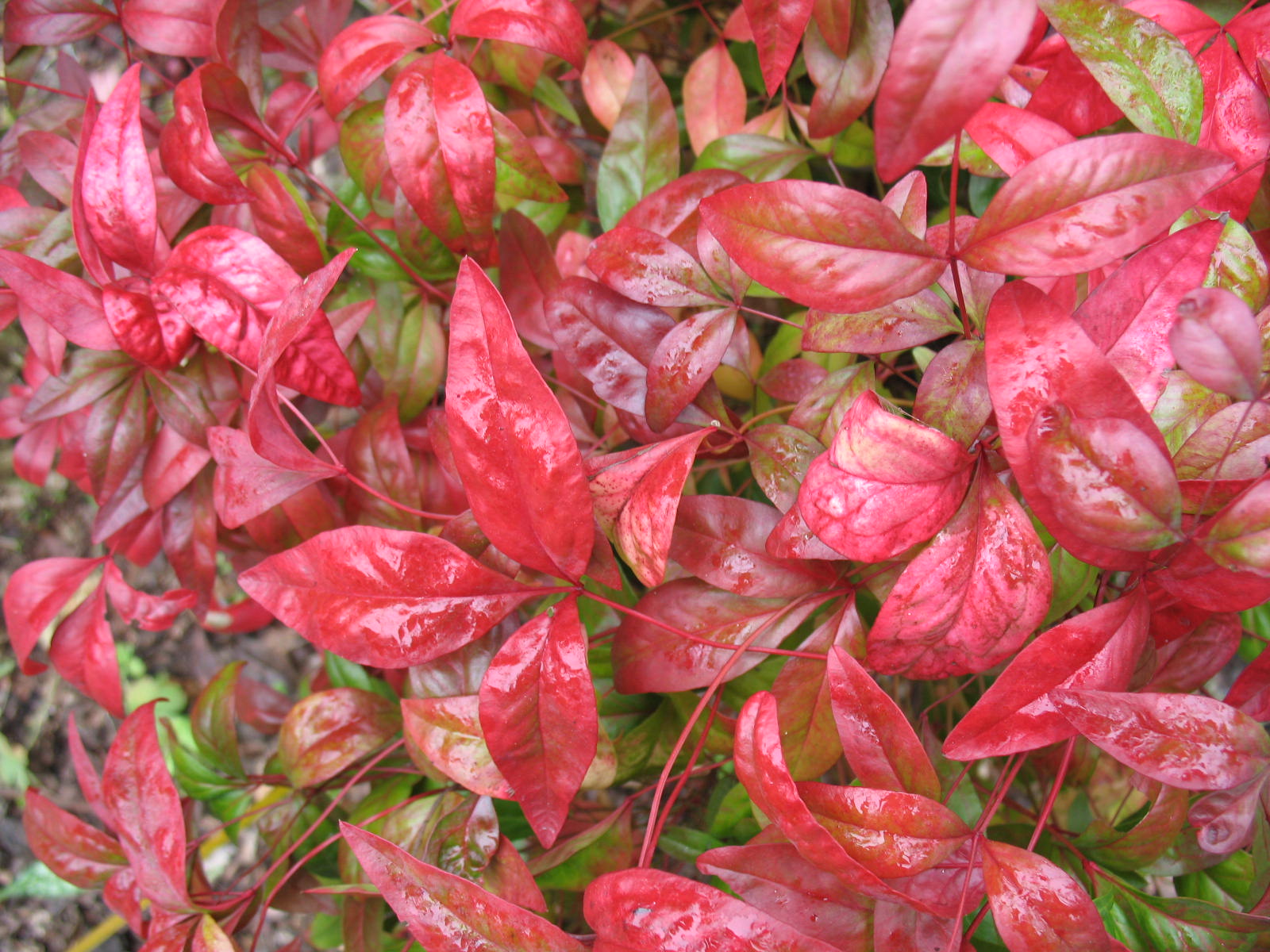
Many of the earliest selections were actually chosen to boost plant combinations with their bright bursts of vivid hues. Above: Nandina domestica 'Firepower' is a compact variety that looks good in every season. And now that the garden is increasingly shady due to the growth of neighboring trees that tower over the space, plants with brilliant chartreuse foliage, or a spectrum of reds are appreciated that much more.

Choisya 'Sundance'
Photo © Alice Joyce
The downy, palmate leaves of variegated Abutilon p. Thomsonii - Winter 2011
Photo © Alice Joyce

Chartreuse Pelargonium - Winter 2011
Each of these plant genera are extremely well-suited to my garden, and so the garden as an outdoor room teems with many varieties and specimen plantings of Pelargonium & Abutilon, Cestrum & Choisya. No longer do I spend time or waste energy trying to meet the needs of fussy cultivars that are struggling to survive.
Long live the appropriate plants!
Drought-tolerant and happy to be in Alice's Garden.